How Much Does a New Roof Cost in Central New York? (2025 Guide)
Wondering what a new roof costs in Central New York? Get real price ranges for asphalt, metal, and flat roofing — plus what drives costs up or down.
Read More
Most Central New York homeowners don't think about their roof — until they have to. Maybe it's a drip hitting the attic floor after a heavy snow. A water stain spreading across the bedroom ceiling. Or a contractor walking by and giving you that look. Whatever brought you here, you're asking the right question at the right time: how long should my roof actually last — and is mine still okay?
The honest answer depends on what your roof is made of, how it was installed, and — especially here in Central New York — how well it's handled our winters. Because a roof in Sarasota and a roof in Utica are not living the same life.
| Material | Expected Lifespan | Notes |
|---|---|---|
| 3-Tab Asphalt Shingles | 15–20 years | Older, thinner — being phased out |
| Architectural / Dimensional Shingles | 25–30 years | Most common in Central NY homes today |
| Premium Designer Shingles | 30–40 years | Thicker, better impact resistance |
| Metal (Standing Seam) | 40–70 years | Best long-term value in harsh climates |
| Metal Panel Roofing | 40–50 years | Durable, low maintenance |
| Wood Shake | 20–30 years | Beautiful but requires more upkeep |
| Slate | 75–100+ years | Premium option, very heavy |
| Flat Roof (TPO / EPDM) | 15–25 years | Common on additions and low-slope sections |
These are national averages. In Central New York, the real number often skews toward the lower end — and here's exactly why.
If you've lived in Utica, Rome, or anywhere in the Mohawk Valley, you already know: our winters don't mess around. Central New York consistently ranks among the snowiest regions in the entire continental United States.
That matters for your roof in several specific ways.
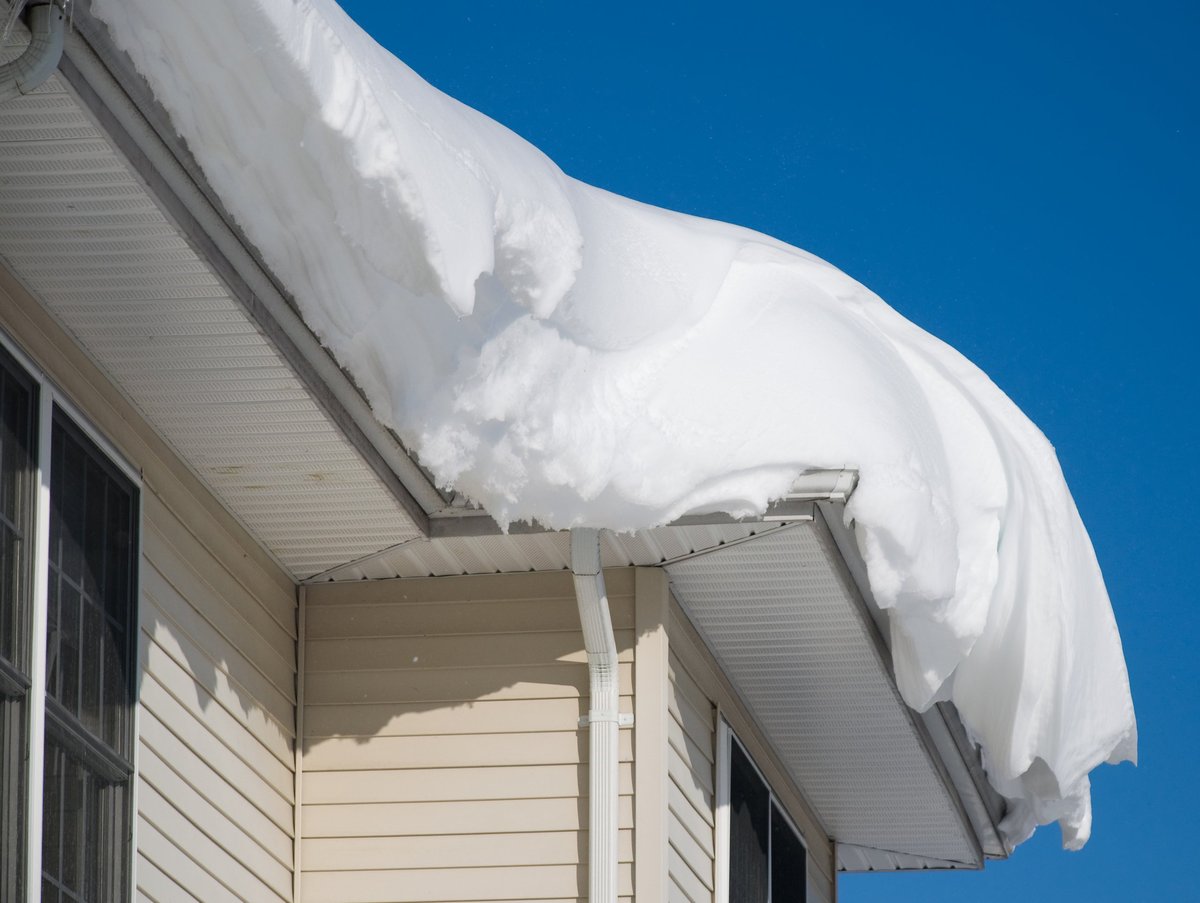
A heavy snowpack adds significant weight to your roof structure. Most residential roofs are engineered to handle it — but repeated heavy seasons, especially on older structures, can stress rafters and cause sagging over time.
This is the big one. When heat escapes through your attic, it melts the bottom layer of snow on your roof. That water runs down to the cold eaves and refreezes, forming a dam. Water backs up behind it and forces its way under your shingles. This is one of the leading causes of interior water damage in Central NY homes — and it accelerates shingle wear dramatically.
Even without ice dams, water works into tiny cracks and gaps, freezes, expands, and opens those gaps wider. Over hundreds of cycles across many winters, this degrades flashing, sealants, and the shingles themselves faster than in warmer climates.
The Mohawk Valley and surrounding areas can see serious wind events, especially in shoulder seasons. Wind lifts shingle edges, breaks the seal between tabs, and creates entry points for water.
The bottom line: A 25-year shingle in Phoenix might genuinely last 25 years. In Utica or Rome, that same shingle under hard winters and ice dam conditions might be showing its age at 18–20. That's not a defect — it's Central New York.
You don't need to get on the roof yourself to spot most of these. Some you can see from the ground or the attic.
When shingle edges curl upward (cupping) or the middle buckles down (clawing), the shingle is drying out and losing its bond. This is a late-stage warning sign.
Those dark, sand-like granules in your gutters aren't dirt — they're the protective coating coming off your shingles. A little is normal after a new install. Steady granule loss on an older roof means the shingles are wearing out.
One or two missing shingles after a windstorm might be a simple repair. A pattern of cracked, split, or missing shingles across multiple sections means the whole roof is aging out.
If you go into your attic on a bright day and see pinpoints of light coming through the roof deck, water is already getting in — or it will be soon.
Any area of your roof that visibly sags or dips is a structural warning sign. Don't wait on this one.
A stain that appears after rain or snowmelt and grows over time points directly at the roof or flashing.
Those dark streaks running down your shingles are algae. Moss is worse — it holds moisture against the shingle surface and accelerates breakdown. Central NY's humidity and tree coverage make this especially common.
If your home was built in the late 1990s or early 2000s and the original roof was never replaced, you're likely 25+ years in on a 25-year product. Even if it looks okay from the street, an inspection will often reveal a different story underneath.
The honest rule of thumb: If a repair costs more than 30–40% of what a replacement would cost, and the roof is past its midpoint lifespan, replacement usually makes more financial sense. We'll always give you the straight answer. If a repair is the right call, we'll do the repair.
The general recommendation is once a year — ideally in late summer or early fall, before the Central New York winter hits. That gives you time to address any issues before ice, snow, and freeze-thaw cycles do their thing.
You should also schedule an inspection after any significant weather event: a major windstorm, a heavy ice dam season, or a hailstorm. Damage that looks minor from the ground can be significant up close.
A 30-minute free inspection once a year is cheap insurance against a $30,000 problem.
If you're getting a new roof and plan to stay in your home for 20+ years, we'll always mention metal — because for Central New York's climate specifically, it's genuinely the superior choice.
Here's why metal performs so well here: Snow sheds naturally off metal's smooth surface, which dramatically reduces ice dam risk. Metal doesn't have a coating that wears off over time. It handles freeze-thaw cycles without cracking or splitting. And with a 40–70 year lifespan, it's likely the last roof you'll ever need on that home.
The upfront cost is higher than asphalt — but when you factor in that it outlasts 2–3 asphalt roofs, the math often favors metal for long-term homeowners.
By the time water is dripping into your living room, it's already been working through your roof deck, insulation, and framing for a while. The best time to know where your roof stands is before anything goes wrong. Free inspections for homeowners across Central New York — Utica, Rome, Whitestown, and throughout Oneida County.
Wondering what a new roof costs in Central New York? Get real price ranges for asphalt, metal, and flat roofing — plus what drives costs up or down.
Read More