How Much Does a New Roof Cost in Central New York? (2025 Guide)
Wondering what a new roof costs in Central New York? Get real price ranges for asphalt, metal, and flat roofing — plus what drives costs up or down.
Read More
A storm rolls through. Your neighbor files a claim and gets a brand-new roof. You file a claim and get a letter saying your damage is "cosmetic" or "due to normal wear." Same storm. Same neighborhood. Completely different outcomes.
The difference usually comes down to one thing: how the claim was documented and handled from the very first phone call.
If you're a New York homeowner dealing with storm or hail damage — or you just want to know how this works before you ever need it — this guide walks you through the entire process. What's covered, what isn't, how to file, and how to make sure you don't leave money on the table.
The short answer is: it depends on what caused the damage. Homeowners insurance is designed to cover sudden, unexpected damage — not gradual wear and tear or problems that built up over time.
Some insurers have moved to Actual Cash Value (ACV) policies for roofs, especially older ones, instead of Replacement Cost Value (RCV). With ACV, the payout is depreciated based on your roof's age. With RCV, you get what it actually costs to replace it today. Check your policy declarations page right now — or call your agent and ask: "Is my roof covered at replacement cost or actual cash value?"
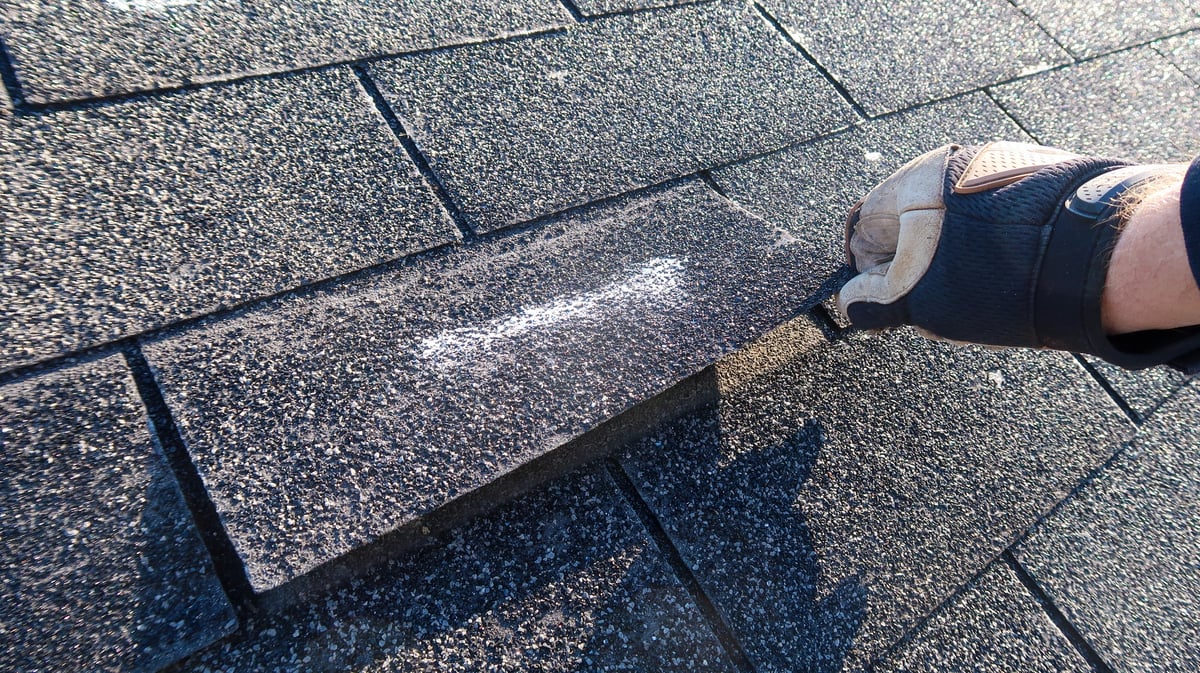
Hail damage isn't always obvious from the ground. Here's what to look for after a hailstorm.
Dents along the top edge of gutters are one of the clearest indicators of a real hailstorm — adjusters use this as confirmation. Dents on aluminum window sills, AC units, or deck furniture are also documentation.
Piles of granules washed out of your downspouts after the storm. Damaged plants or stripped leaves from large hail.
Important: Hail damage compromises the shingle's ability to shed water properly, even when it doesn't look catastrophic. A shingle with bruising is aging faster than its neighbors and will start leaking years before it otherwise would have. This is why insurers sometimes try to call it "cosmetic" — and why proper documentation matters.
Before you call your insurance company, before you call a contractor — document the damage thoroughly.
Call your insurer's claims line — not your local agent — and open a claim. Have your policy number, the date the damage occurred, and a brief description ready.
This is the step most homeowners skip — and it's the most important one.
Get a roofing contractor out to inspect your roof before the insurance adjuster arrives. Adjusters work for the insurance company. A contractor's job is to identify every legitimate item of damage on your roof.
When you have a contractor's written damage report in hand when the adjuster shows up, the inspection becomes a conversation between two professionals — not just the adjuster's word against yours.
Do everything you can to be there for the adjuster inspection — and if you've already had a contractor inspect, ask if they can be present too. Having a contractor walk the roof alongside the adjuster ensures damage items aren't overlooked and allows for a professional dialogue.
After the inspection, you'll receive a claims summary or "scope of loss" document. Read it line by line and compare it to your contractor's damage report.
If there are discrepancies, you can request a re-inspection or file a supplemental claim.
Most insurance payouts come in two parts: an initial ACV check (minus deductible and depreciation), and a recoverable depreciation check released after the work is completed and invoiced.
Warning: Never sign a contractor's contract that waives your recoverable depreciation, and never let a contractor offer to "work within your deductible" — that's insurance fraud in New York State.
After a major storm, out-of-state crews flood into affected areas. They're often unlicensed in New York, use lower-grade materials, and disappear when warranty issues arise.
What to look for:
A denial isn't necessarily final.
Don't wait to find out if you have damage. We offer free storm damage inspections for homeowners across New York — Rockland County, Oneida County, and everywhere in between. We document everything, walk you through the process, and can be with you when the adjuster comes out. No obligation. No pressure.
Wondering what a new roof costs in Central New York? Get real price ranges for asphalt, metal, and flat roofing — plus what drives costs up or down.
Read MoreCentral New York winters are tough on roofs. Learn the real lifespan of every roofing material, the 8 warning signs your roof is failing, and how to decide between repair and replacement.
Read More